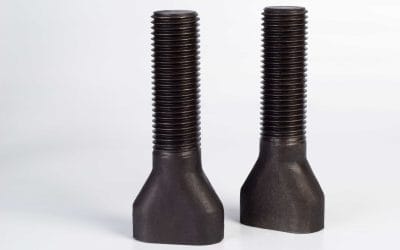
The expansion bolt (also called an expansion anchor or wedge anchor) is the most widely used fastening element for anchoring structures, equipment and supports to concrete and masonry. Its principle is simple: when the nut is tightened, an internal mechanism expands against the walls of the drilled hole, creating a high-strength mechanical fixing without the need for chemical adhesives.
How does an expansion bolt work?
The bolt is inserted into a hole previously drilled in the concrete. When torque is applied to the nut, the cone at the end moves and forces the expansion sleeve (or clip) to press against the base material. That radial pressure is what withstands tensile and shear loads. This is why the diameter and depth of the hole are critical: an oversized hole drastically reduces the anchor’s capacity.
Types of expansion bolts
- Wedge anchor: the most used in structural concrete. Expansion sleeve at the end plus thread for nut and washer. Ideal for high loads: machine bases, steel structures, railings.
- Sleeve anchor: the sleeve covers almost the entire body, distributing pressure better — recommended for masonry, brick or lower-strength concrete.
- Drop-in anchor: expanded with a setting tool and receives a threaded bolt; useful for suspended installations (piping, cable trays, HVAC).
- Expansion plugs: for light to medium fixings, combined with screws or lag bolts.
Most common sizes and materials
Typical diameters range from 1/4″ to 1″ (or M6 to M24 in metric), with lengths based on the thickness to be fixed plus the minimum embedment depth. For materials, the usual options are:
- Zinc-plated carbon steel: general indoor use.
- Hot-dip galvanized steel: outdoors and humid environments.
- Stainless steel: corrosive environments, process plants, coastal areas.
How to choose the right expansion bolt
- Base material: structural concrete, brick or hollow block? The anchor type changes (wedge for solid concrete, sleeve for masonry).
- Working load: calculate tension and shear with a safety factor; for critical applications, require the manufacturer’s test data.
- Diameter and embedment: respect the manufacturer’s minimum depth and recommended installation torque.
- Environment: humidity, chemicals or marine exposure define the coating or the use of stainless steel.
- Certification: for mining and formal construction, request quality certificates and per-batch traceability.
In constant-vibration applications — crushers, mills, conveyor structures — also consider rubber washers or anti-vibration systems: loosening due to vibration is the number-one cause of failure in poorly specified anchors.
Common installation mistakes
- Drilling with a bit larger than specified.
- Not cleaning dust from the hole (it reduces expansion friction).
- Applying torque above the recommended value, cracking the concrete.
- Using indoor anchors (zinc-plated) in corrosive environments.
Expansion bolts backed by the factory
At MODEPSA we manufacture and supply expansion bolts for mining, construction and metalworking, with quality control backed by our INACAL-accredited laboratory — the only one in a bolt factory in Peru — and per-batch quality certificates.
Not sure which anchor your project needs? Our technical team advises you at no cost: request your quote here and tell us the base material, loads and working environment.